
AfroImagine

AfroImagine is a global creative writing platform dedicated to African children and teens aged 8 to 17, providing them with a home for their voices and a stage for their imagination. It is a space where young storytellers can express themselves freely, connect with a community of peers, and share their vision of Africa with the world.
Every child carries within them a world of stories shaped by their experiences, dreams, and hopes for the future.
For too long, the African narrative has often been told by others, leaving out the voices of those who live it.
AfroImagine exists to change that.
We are here to create a space where young African writers can speak in their own words, share their own truths, and reimagine the Africa they wish to see.
Our Vision: Writing the Africa We Dream
To nurture a new generation of African storytellers who write with purpose, confidence, and creativity, and whose stories help the world see Africa through their eyes.
AfroImagine is more than a platform. It’s a literary movement built to inspire, amplify, and empower the creative voices of African children and teens, wherever they are in the world. Rooted in imagination, identity, and cultural pride, AfroImagine invites young African writers to tell their stories and shape the future they dream of through the power of words.
We believe that storytelling is one of the most powerful tools for transformation. Through original writing, which could be fiction, poetry, reflection, or futuristic dreams, young people are rewriting the narrative of Africa, one story at a time.
Our Roots: Jordan Hill Creative Writing & Reading Workshop
AfroImagine is an initiative of the Jordan Hill Creative Writing & Reading Workshop, a Nigerian-based social enterprise with over a decade-long commitment to nurturing young writers and authors. Jordan Hill has reached hundreds of children through in-person and virtual workshops, one-on-one mentorship, and publishing opportunities that celebrate children’s creativity.
The success and growth of this work revealed a powerful truth: African children are hungry for spaces where their voices matter, where their imaginations are encouraged, their stories are heard, and their identities are honoured.
AfroImagine was born to take this vision further, from local workshops to a global stage.

A Movement, Not Just a Platform
AfroImagine is not just a website where stories live. It is a movement with a growing global community of young African storytellers supported by mentors, educators, and cultural advocates. It’s a safe, empowering space where creativity is nurtured, cultural identity is celebrated, and young voices are seen and respected.
As a platform, AfroImagine provides year-round opportunities to write and be published.
As a movement, AfroImagine inspires pride, purpose, and possibility through creative expression.
Why It Matters: Culture, Creativity, and Representation
Stereotypes, misunderstandings, and incomplete narratives have shaped African stories for generations.
AfroImagine believes in flipping the script by giving young Africans the power to tell their own stories.
It’s about:
Reclaiming the narrative of Africa
Celebrating linguistic and cultural diversity
Building pride in African identity
Encouraging self-expression and creativity from an early age
Every story published on AfroImagine adds to the growing tradition of authentic African storytelling, one that reflects the joy, dreams, and dynamics of the continent and its people.

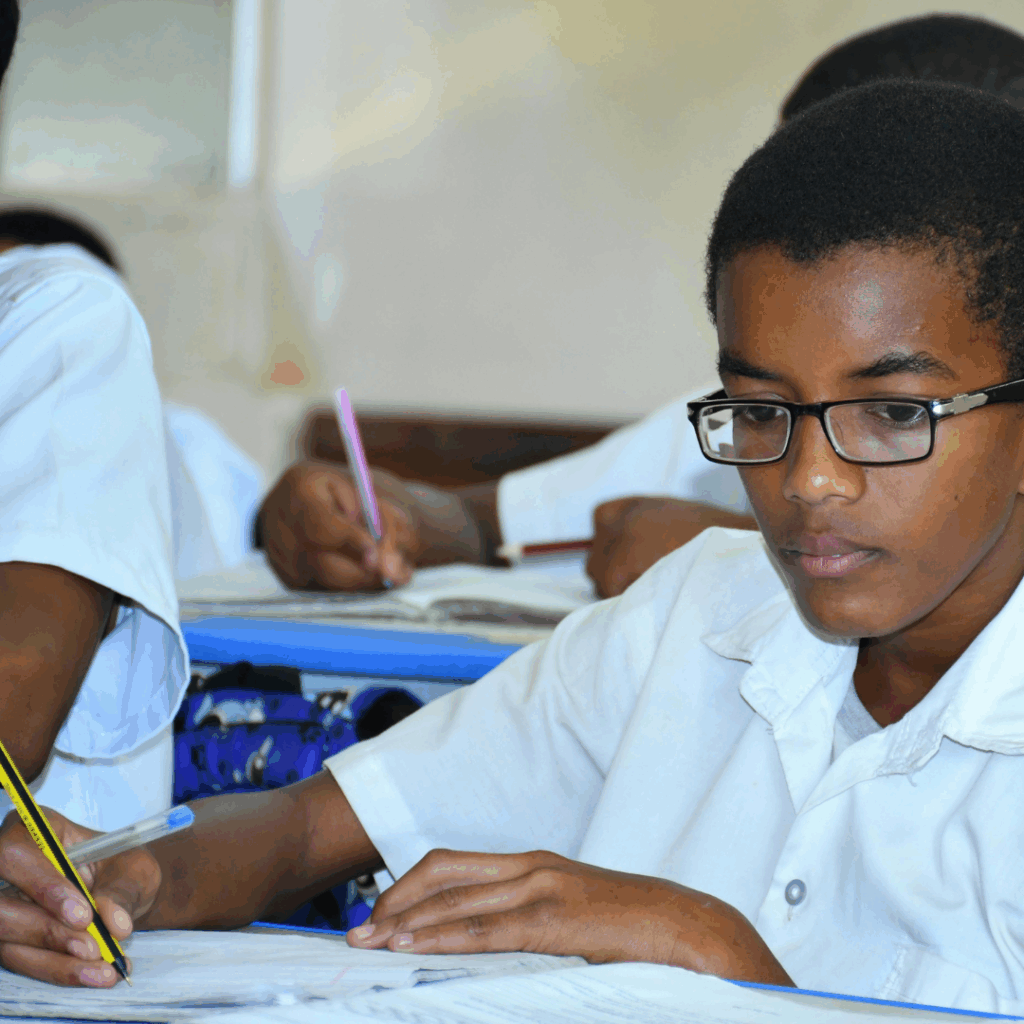
Our Commitment to Children’s Rights
AfroImagine’s mission is guided by the United Nations Convention on the Rights of the Child (UNCRC), an international agreement that sets out the civil, political, economic, social, and cultural rights of children.
Two articles are especially important to our work: Article 12 and Article 29.
Article 12 – Respect for the views of the child
States Parties shall assure to the child who is capable of forming his or her own views the right to express those views freely in all matters affecting the child, the views of the child being given due weight in accordance with the age and maturity of the child.
For this purpose, the child shall in particular be provided the opportunity to be heard in any judicial and administrative proceedings affecting the child, either directly, or through a representative or an appropriate body, in a manner consistent with the procedural rules of national law.
Children have the right to express their opinions on matters that affect them, and those opinions should be respected according to their age and maturity. AfroImagine exists to give young African writers a safe space where their voices are heard and valued.
Article 29 – Aims of education
States Parties agree that the education of the child shall be directed to:
(a) The development of the child’s personality, talents and mental and physical abilities to their fullest potential;
(b) The development of respect for human rights and fundamental freedoms, and for the principles enshrined in the Charter of the United Nations;
(c) The development of respect for the child’s parents, his or her own cultural identity, language and values, for the national values of the country in which the child is living, the country from which he or she may originate, and for civilizations different from his or her own;
(d) The preparation of the child for responsible life in a free society, in the spirit of understanding, peace, tolerance, equality of sexes, and friendship among all peoples, ethnic, national and religious groups and persons of indigenous origin;
(e) The development of respect for the natural environment.
Education should help every child develop their talents and abilities to the fullest, while building respect for themselves, others, their culture, and the environment. AfroImagine uses creative writing to nurture children’s potential, cultural pride, and readiness to participate fully in society.
Join the Vision
Are you a young writer, a parent, an educator, or a supporter of African creativity?
AfroImagine is your space.
Together, we’re helping build a future where African children are not only heard but they’re celebrated.
This is the Africa we dream.
And it begins with a story.